Author Archive: Competad
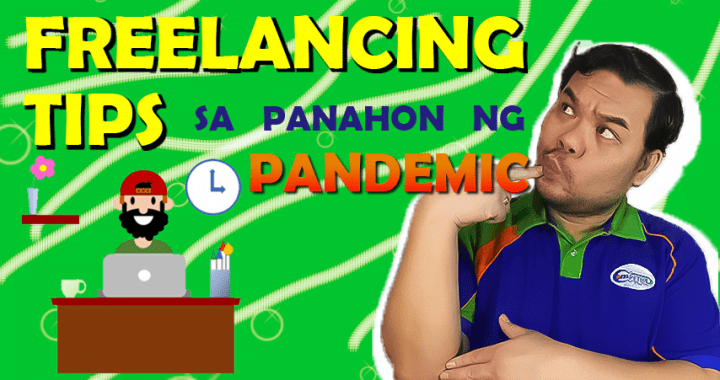
Freelance Work: How to Survive During the Pandemic
Not all professionals get paid on a regular basis, freelancers get paid after completing a project. This is a challenging kind of work these times of the pandemic because there has been a decreased demand for them. So if you are a freelancer or are planning to be one, how can you survive?
Regardless of the situation, finding work is challenging. This becomes even more challenging during the pandemic as you also struggle to balance work and personal life. Aside from that, there is also the feeling of isolation that we all need to deal with. Like everyone else, you need to maintain your sanity and mental health in order to adapt to the new challenges.
So how do we really survive during the time of the pandemic? We have a few tips.
- Assess the situation. These transformational times require that we take a step back and look at what we are dealing with. Check your finances. How much have you saved? This way you can plan how much you can spend monthly and how long you need to secure a new project and get your next pay. Of course, if you assess that you will take long before this happens, you will need to adjust your spending. Check your operational costs for things you can minimize such as utilities, insurance, and others.
- Reach out to others. Reconnecting with your network is a great way to check for possible opportunities. Have a win-win mindset. If there are job opportunities and projects you cannot take on because it is out of your scope, refer these to people in your network. This way, they also have a greater chance of referring you to others in case your expertise is needed. It is also okay to build a support community. This could be a group on social media, an email group, a little club. You may think that you are in competition, but you will be surprised how sharing best practices can work for the better of everyone. Plus, this will help with maintaining your mental health and steering you away from your feeling of isolation. Talk about your challenges with others and perhaps healthily share suggestions with each other on how to address such.
- Innovate yourself. You may think that you have good enough experience, but identifying new ways of offering your service is not a bad idea. Are there new ways that you can add value to your services? An after-sales component perhaps? And of course, innovating yourself can also be about learning new skills. If you are a graphic artist specializing in digital drawings and logo, try another area such as photo editing or layout. You can also expand to learning video editing, writing, and many others. Now, remember, do not need to be great to start, but you do need to start something to become great.
- Always be ready showcase your skills. Always prepare a portfolio showcasing the different styles you have can work with. For example, if you are creating logos, show your potential client previous logos and concepts you have created for others. Do not make a sample logo using the same potential client’s information. Remember that some of them may only be fishing for ideas, which is not wrong, but you have to make sure that you also protect yourself. In your portfolio, create multiple approaches you have taken in previous project. For example, if you are a writer, your portfolio can include different articles you wrote for different industries. Showing the variety of what you can do definitely helps you secure the project.
- Secure your pay. Dealing with multiple clients mean you also deal with several payments (Hopefully). One problem for freelancers in the Philippines is that they get paid either really delayed, or in worse cases, not even get any payment at all. Some clients cancel the project after you have already put so much effort into it, then leave you without any payment. So how do you avoid these? First, you need to ensure that you have a documented agreement outlining the scope of the project. Then, document the payment scheme. Ideally, you have to get a 50% down payment before putting more effort into any project. If the client asks for a sample work, do not give a sample by doing exactly what they need just give them a portfolio. This ensures that if they like your artistry, they can make a decision to hire you.
Understanding the Value of Psychometric Tests

Are you an HR challenged with selecting the right person for the job? Do you want to address attrition by hiring people who would be a good fit for the job opportunities in your company?
A psychometric test may help you!
What are psychometric tests? Psychometric tests are standardized methods used to measure behavior and mental capabilities. This employs the use of the scientific method together with statistical and other principles for objective measurement. In different industries, psychometric tests are used to evaluate a candidate’s fit to certain roles. Certain roles require specific cognitive, comprehension, and personalities so that the person assigned to it can deliver with maximum effectiveness. A standard psychometric test allows an employer or assessor to uncover certain traits that match those. These pieces of information are usually difficult to extract using face-to-face interviews.
Should psychometric tests be a sole basis for hiring? No. The recruiter still needs to identify and ascertain other factors before facilitating a psychometric test. There are still a lot of other requirements aside from personality, cognitive ability, and comprehension. Recruiters still need to review the candidate’s resume, conduct an interview, and do background check. While the psychometric test can provide good information about the potentials of an individual, it can never check a candidate’s work history and analyze gaps that may indicate their fit for the role or otherwise. Some companies also have specific skills tests that provide objective data on the candidates’ abilities.
Does everyone agree that a psychometric test provide a good barometer for job fit? Not everyone does. But it is worth looking into. We have to take into account that psychometric tests are examined statistically so they are built through an objective process in order to gain unbiased results. Because everyone is presented with exactly the same questions, the method offers a very good chance of providing reliable data from your response group. The information gathered is predictive of a candidates’ potential performance in the job.
Our final verdict. There is no single approach that can be considered best in selecting from prospective candidates. Even the traditional one-on-one interview has its own limitations and downsides. A combination of a few proven approaches may really benefit you in making sure that you secure the best candidates for the job. This means that there is value in looking into psychometric tests for evaluation.
To know more about how you can select the best candidate for your company, you may also want to check our premium e-Workshop on Recruitment and Selection in the New Normal.

Memos for Workplace Communications
At this time when the COVID-19 pandemic has overturned the usual way we do business, we are faced with multiple overwhelming changes that make requires a lot of communication. If we are to drive people toward success in the middle of this crisis, it is important to keep them informed at all times. They need to know about new business strategies and considerations. If you are an HR practitioner, memos will be your good friends.
These are one of the most common and simple means of communications in the workplace which provides a short and direct communication to your staff in regards to important matters and reminders. There are two reasons why we create a memo: to bring attention to issues and to solicit actions toward issues. Memos are used to share updates and new processes within the company. They can also be used when providing more information about company decisions. They can also provide information for trivial items that people need to be reminded of, for example, cleaning up the pantry sink after use. Memos are truly versatile and important so everyone needs to know how to write them professionally and with clarity.
Here are some tips that may prove helpful when you are creating your memo.
- Purpose Must Be Clear and Brief.
When creating memos, it is critical that you use simple words and phrases. Your purpose is not to impress people with your wide vocabulary, instead you want them to take action on certain workplace issues and reminders. It is okay to use jargon only when you know that the intended readers will be able to understand the message despite using these. When using acronyms, it is also good to define these so that everyone can fully understand, for example, it is better to write down “To Be Announced” than put TBA and get too many employees asking the same question. Using simple words can definitely make more impact for your memo.
Other than clarity, it is important to have brevity. This means that your memo should not take too much of other people’s time to read. Get the fewest number of words you can to express the most number of thoughts. There must not be any room for words that do not add meaning. Putting such as, as a matter of fact, needless to say, in terms of, the fact that, in order to, all of the, at the end of the day, are some phrases that may either be eliminated from your memo or shortened using a word. As most writers would say, KISS – Keep it short and simple!
- Audience-Focused
Memo is not creative writing, therefore it should be made with your reader in mind. You need to clearly determine what kind of readers are going to find your memo on the pantry wall or wherever you may post them. You need to use this information to decide the overall tone of your memo. For example, if you know that your readers are likely managers, you must use a formal tone with much attention to details. If you are targeting a group of sales person to convince them to send their sales reports on time, you may need to use a bold tone that can persuade them to act quickly. If you know that your employees are too busy at work, you will want to create memos with two or three quick sentences so that they do not need to read for a long time where your posted memo is. What words can your reader most clearly understand? What can they easily relate to? There are many other factors you can consider, but writing for your reader and not yourself is one of the most important things to keep in mind in writing a high-impact memo that achieves its purpose.
- Objectivity
Your memo should not have opinion, preferences, emotional language, and subjectivity. Saying, “The management would truly appreciate if everyone can wear the proper protective gears before entering the laboratory…” is less than ideal. Instead say, “The management requires the use of proper protective gears when entering the laboratory.” This sends a very clear sense of the action that you would like the employees to take. The first sentence makes it appear like it is a mild request where employees still have the prerogative to follow or not. If you want people to take action, do so.
Emotions should also not be present in a memo. Saying, “Our manager was very angry with the late submission of reports last months. Please do not disappoint him further by repeating the same this month. All reports need to be submitted on time.” Is very counter-productive. Some people may take it the wrong way. Saying, “Please submit all reports on time to avoid delays in processing” could replace the entire paragraph. This also provides a more objective deliver of information that should call for action.
- Friendly but Professional
While it is okay to have a formal tone for the content of your memo, it is a much more informal approach to sharing information in the workplace. Compared to a business letter, it has a more relaxed and easy-to-follow structure. It is sometimes used to address unofficial speculations from the grapevine, so it only makes sense that it should be much more forward and relatable for your employees. Being informal, all the other tips can be easily achieved as you do not need highly technical terms when creating it.
At this time of crisis, it is definitely important that we keep communication lines open while considering social distancing. One possible way of sharing information without having to consistently call a meeting is through memos. Any HR or professionals in the area of leadership need to make sure that their skills in creating memos is in tip-top shape so that information can effectively be passed on to employees as we go through various changes in the way we work.
If you would like to refine your Memo Writing Skills, you may also attend our webinar sessions on Business Writing: Creating Memos, Emails, and Other Office Communications. Our next Communications for HR e-Workshop will be on 5 June 2020. For more details, you may contact us through the following:
For inquiries. You may contact us from 10:00 am to 5:30 pm, Monday to Friday except holidays, through the following:
- Landline: (+632) 3433 3342
- Smart Mobile: (+63) 998 562 4984 to 85 / (+63) 0921 978 0078
- Globe Mobile: (+63) 917 317 4985 Contact us
- Email: training@competad.com or seminars@competad.com
- You may also visit our facebook page: https://www.facebook.com/COMPETAD/ and send us a message there.
5 Things to Know About COVID-19
With all the things happening now in the country and throughout the globe in regard to the Corona Virus, we would like to also help in disseminating valuable information that can help in our battle amidst this pandemic. Below are some questions you may have about it and some of the simple answers you need to know.
What is COVID-19?
The Novel Corona Virus (COVID-19) has been declared by the World Health Organization as a global health risk as of 11 February 2020. It originated in Wuhan, China and made headlines across different countries around the globe as it became a pandemic. It was originally called NCOV but was officially declared by the World Health Organization (WHO) as COVID-19 on 11 February in order to avoid confusion with any other types of corona virus.
The novel corona virus is part of a bigger group of viruses that cause sickness in animals and humans that usually cause respiratory issues. These respiratory problems may range from common colds, difficulty in breathing, to a variety of more acute symptoms. Some corona viruses that belong to the same family as COVID-19 that we are previously familiar with are MERS (Middle East Respiratory Syndrome) and SARS (Severe Acute Respiratory Syndrome)
How and Where Did it Originate?
The whistle blower doctor for the corona visus is Dr. Li Wen Liang. When he got sick, he posted in a social media platform in China saying that there is a new virus that is infecting individuals. This alarmed officials so he was detained by the public security bureau and was asked to sign a document declaring that he was only disseminating false information. A week after this, he dealt with a female patient who has glaucoma and was also infected by the corona virus. In January 10, he started to get symptoms such as coughing. The next day, he also developed fever. To avoid spreading the disease to his pregnant wife, five year old child, and children, he decided to stay in a different house. Then, he was brought to the hospital. Days later, his parents also got sick and was also brought to the hospital.
10 Days later, January 20, more people have been infected by the virus, which prompted the Chinese government to declare a state of emergency. Initially, Dr. Li tested negative for the virus. However, on 30 January 2020, his results came positive. His case worsened in 4 days until he eventually died. On Feb 11, WHO officially declared the name of the Novel Corona Virus as COVID-19 in order to avoid confusion with other types of corona viruses.
How does COVID-19 spread?
The virus can be transferred among humans and animals. These can be spread through droplets. These droplets come from the mouth and nose through human or animal breath. When a person with COVID-19 breathes, droplets fall onto nearby surfaces; tables, walls, etc. When a person not infected with the virus touches these surfaces and touches his eyes, nose, or mouth, they will allow the virus to enter into their bodies. It is also possible to inhale droplets from the air exhaled by an infected individual. This is why it is extremely important to maintain a distance of 3 feet from a person who is sick. Current studies show that, COVID-19 is mainly transmitted through respiratory droplets, rather than through air.
What are the Symptoms?
The COVID-19 virus has a 5 to 24 days incubation period. This means that you may not immediately detect that you when you contract the virus. Incubation period is the amount of time it takes for the virus to fully develop and show the symptoms. What this means is that you may have the virus and not show any symptoms in the first few days after contact. The symptoms may begin gradually and start out mild. People infected by the virus may experience the following symptoms:
- Runny nose
- Nasal Congestion
- Sore throat
- Dry Cough
- Fever
- Diarrhea
- Difficulty breathing (severe cases)
There are also cases of COVID-19 that are asymptomatic. This means that they are infected and aare carriers of the virus but do not show any signs and symptoms at all. They also report to feel well. This is why quarantine and social distancing is very important to ensure that we minimize the likelihood of contacting the virus from asymptomatic individuals.
What can I do to avoid getting COVID-19?
The first thing you really need to do especially during the quarantine is stay at home. However, if going outside or to high-risk areas cannot be avoided, these steps may also help:
- Frequently clean your hand by washing with soap and water and disinfecting.
- Cover your nose with a bent elbow or tissue when sneezing. If you used a tissue, discard it immediately.
- Avoid contact with anyone who has cough.
- If you have cough and difficulty breathing, go to the nearest hospital to get checked.
- If you have mild symptoms, follow the above steps and stay home.
- Keep a meter’s distance away from people when you need to go outside.
- Do not touch your face as much as possible.
- Refrain from activities that may weaken your lungs such as smoking.
We hope that you stay home and stay safe during these times of challenges. Have a good day everyone!
Sources:
- RATED K Episode Premeiered last 17 Feb 2020.
- WHO YouTube Channel: https://youtu.be/bPITHEiFWLc
- World Health Organization Official Website: https://www.who.int/
HR FOCUS: Labor Relations and Mental Health

Labor Relations is always one of the many things that challenges the HR professionals. In this event, we shall talk about best practices and guidelines for Labor Relations so that we can make sure that we forward our company’s goals while adhering to the standards set by the Department of Labor and Employment. Furthermore, as the DOLE releases some updates in regard to the incorporation of Mental Health in the workplace for Private Sectors, we would like our HR community to know more about it.
What is Mental Health in the workplace? and what are the things we can do to make sure we build a culture in consideration of this? We will discuss all these and more during our session through the help of our Personal Development Coach Ms. Bonnie Factor.
In addition, we shall also talk about other recent updates from DOLE with the help of our special guest, OIC Director DOLE Bureau of Labor Relations, Atty. Maria Consuelo “Connie” Bacay. Here are some of these very interesting hot topics:
- Implementation of mental health policies
- Provision of employee’s final pay
- Issuance of Certificate of Employment
- Advisories on pre-employment documents
Have an opportunity to interact with our speakers through a short question and answer at the end of their presentations. This way, you can also clarify questions about these new policies and Mental Health in the workplace.
The event shall be attended by HR practitioners and other professionals from different industries in the country so this will also be a great opportunity to network and gain new friends. As such, sponsorship opportunities are also welcome.
Learning Investment is only Php 1699.00 (Non-VAT) which is inclusive of your seminar materials, certificates, snacks, and lunch.
Tell your friends about it and see you there!
For inquiries and reservations, you may dial
- Event Hotline: (+63)928-353-6090
- Trunkline: (+632) 3433 3342
- Alternate Mobile: (+63)998-562-4984
You may also contact us through our other numbers in our website.
Adobe Photoshop CC
Click Here to REGISTER
Course Overview
Adobe PhotoShop has long helped graphic designers bring their visions to life in advertisements, magazine layouts, billboards, and virtually every other medium. Wether you create images professionally or just want professional results, you can count on Adobe PhotoShop for the ultimate in creative control. At the end of this course the learner will be able to create and edit images, retouch and correct adjustments.
Course Objectives
• Name Card • A5 Flyer / A3 Poster • Social Media Post
I. Getting Started
Introducing Photoshop
Explain the purpose of Photoshop: discuss what Photoshop can help accomplish, and identify its boundaries.
A. Understanding digital artwork: bitmap/raster/pixel versus vector/line
B. Understanding how Photoshop works with other software
C. Finding your way around Photoshop
D. Understanding key concepts
II. Managing Documents
A. Creating new documents
B. Working with existing documents
C. Managing multiple documents
D. Navigating documents
E. Using rulers, grids and guides
III. Working with Layers
A. Understanding how and why Photoshop uses layers
B. Creating, duplicating, merging and deleting layers
C. Showing, hiding, locking and linking layers
D. Organising and grouping layers
E. Adding creative effects to layers
F. Working with Smart Objects
IV. Working with Shapes and Text
A. Drawing regular and custom vector shapes
B. Formatting shapes
C. Adding text
D. Formatting text
V. Painting and Erasing
A. Painting
B. Simulating natural media effects
C. Replacing specific colours
D. Erasing artwork
E. Defining custom brushes
VI. Moving, Transforming and Resizing
A. Moving areas of artwork
B. Using the transform tools
C. Understanding resolution
D. Resizing/scaling complete documents
E. Cropping artwork
F. Adjusting canvas and artboard sizes
G. Content-aware scaling
VII. Selecting and Masking
A. Understanding selections
B. Making selections
C. Quick Masking
D. Editing selections
E. Refining selections
F. Understanding layer masks
G. Understanding clipping masks
H. Saving/loading selections
VIII. Making Adjustments to Tone and Colour
A. Making tonal adjustments
B. Making colour adjustments
C. Converting colour artwork to black and white
D. Working with adjustment layers
E. Colour adjustments using the Camera RAW filter
F. Matching colours between documents
IX. Working with Colour
A. Selecting colours
B. Working with colour swatches
C. Creating areas of flat colour
D. Creating and working with gradients
E. Understanding colour models
F. Synchronising Creative Cloud’s colour settings
G. Proofing colours
X. Retouching and Repairing
A. Replacing one area of artwork with another
B. Intelligently removing small blemishes
C. Reducing red-eye
D. Painting back previous artwork states
E. Lighten/darken particular areas of artwork
XI. Applying Creative Effects
A. Blurring artwork
B. Sharpening artwork
C. Distorting artwork
D. Applying artistic effects
XII. Saving and Exporting
A. Saving/exporting for print
B. Saving/exporting for the web and other on-screen uses

Registration Instructions:
1. Fill out the registration form by clicking here.
2. You may also download the word attachment in the link and send it to training@competad.com
3. Our admin team shall send you shortly the Statement of Account/Confirmation of registration. Sign the statement of account to conform and finalize your registration.
4. Follow the instructions in the statement of account and complete your learning investment deposit.
5. Send the scanned copy of the signed Statement of Account and your deposit slip.
6. Should you need an official Billing Invoice, please call us at (02)4333342.
Five Important Life-Lessons for Leaders
Leadership is a skill that we can learn throughout our lifetime; it never stops. In the same way that other professions require some form of continuous learning, being a professional leader also means that we have to keep an open-mind and a thirst for learning. No one can claim that they already know everything there is to know about it. As people change and as new generations get introduced to the workforce, getting a new perspective in leadership is always a good idea.
For business leaders, the task of leadership becomes extra challenging because of the need to juggle your ability to manage people and company resources. You need a mix of creative leadership as well as adherence to processes and procedures. You also need to be aware of the business, legal, and psychological impacts of your actions.
In this article, we have collated five items that are important lessons for leaders so you may reflect on how you can improve in these different areas regardless of your tenure and experience.

Inspire Teamwork. Effective leaders are not those who always speak in terms “me.” This is not because he avoids using the first-person pronoun when he speaks. Inspiring team work is about influencing people to think in terms of “we” – the team. It is about making the team understand the function that everyone needs to fulfill. When a leader inspires team work, the members do not dodge accountability. They feel answerable to their actions and lack thereof. To achieve this, a leader must be able to give credits to the members for their accomplishments. Leaders who are credit grabbers will never be able to inspire teams. Instead they will breed distrust and resentment among their members.
Build Self-Esteem. As a leader, you set the intensity for your employees’ attitude at work. Employees usually build a positive work attitude when they are happy with what they do. This happiness can be closely associated with their self-esteem. In business, your clients, previous and current employees, competitors, family, and even friends may give you dozens of criticisms. This goes the same to each of your employees. More often than not, criticisms are very stressful to hear. Sam Walton, the founder of Wal Mart says that employees need to have a good self-esteem in order to be effective at work. Constantly criticizing and pointing out their flaws and short-comings is a guaranteed way to lower their morale and performance. Even Richard Branson, owner of Virgin Group of Companies, says that leaders should always “look for the best in people”. This is easier said than done. While it is helpful to provide feedback to employees, make sure that you do not exclusively about short-comings. Little achievements need to be celebrated, too. When you do this, you reciprocate your employees’ trust. When you give trust to your employees, you teach them to have trust in their own abilities, too. This builds their self-esteem and inculcates a sense of “i-can-make-a-difference” in them, allowing them to become more driven and results-oriented.
Encourage Other’s Development. Leaders should aim for their employees’ success. They should encourage them to be the best they can be. True leaders help their direct reports get promoted. Looking out for people’s best interest and growth helps you build a more positive relationship with them. The moment that a leader feels scared that their employees can get better than them is the moment they fail as a leader. True leaders don’t create more followers; they create more leaders. This is because true leaders are hard to find. The more leaders you have in your company, the better equipped your company will be for growth. The more growth your company has, the better opportunities you create for yourself and your employees, too. Employees are like seedlings; it is the leader’s job to nurture them, water them, cultivate them, and watch them grow. As a leader, you need to mentor people: coach them, help them make decisions, allow them to learn from mistakes, guide them to reflect on their actions, and help them celebrate their little successes.
Learn to Effectively Communicate. Needless to say, none of the things a leader must do can be accomplished without communication. Getting people onboard and aligning them to the goals are essential in accomplishing anything. As you go through the journey, you also need to ensure that everyone is in the loop with what is going on. Understanding and discussing your milestones and challenges as a group is truly very crucial. Making everyone understand the big picture also greatly impacts the results of any given task. As a leader, you should allow an avenue for open-communication, sharing of suggestions, and brainstorming. Efficient means of communication using different technologies is a vital part of this process. Sometimes, leaders do not even step out of their comfort zone to adjust to the new workforce. The Millenials and Generation Z workers, a huge part of our workforce now, are fond of technology. As leaders, we should be able to make use of this available means of communications. Using a mode of communication that people understand, people can relate to, and people are passionate about is truly very effective.
Listen. Many leaders claim that they listen, however, they truly don’t. They only listen to respond rather than to understand. As Stephen Covey shared in his book, “Seek first to understand then be understood…” This is a very powerful way of getting the best out of people. Great ideas can come from the most unlikely employees. In order to tap into these, a leader must learn to genuinely listen. If a leader fails to listen, then you will be surrounded by people who have nothing to say. Many experienced leaders feel that there is not much to hear as they think that they have already heard everything. But one thing is sure; there is always room for learning when you listen. Listening builds a good relationship with your employees; it helps them feel empowered and it helps you as the leader become more influential to them.
These five may not be exhaustive of all the important life lessons a leader must learn, but we feel that these are most important. If you are able to learn these lessons, it can truly take you a long way into your leadership journey.
==============================
For more information about enriching your leadership stay tuned for more of our articles. You may also attend one of our training or workshop. Please check our calendar for more information. You can also contact us directly.
Holy Week Thoughts: Cleanliness Is Next To Godliness
The Holy week, also known as semana santa, is definitely an event Filipinos look forward to. Even weeks ahead, many Filipinos take time to plan activities for it. Some take advantage of the holy week to go on a well-deserved vacation while others go for reflection and prayer. As majority of the country’s population comprises of Roman Catholics, visiting different churches to pray is definitely part of the tradition. Our team members took part in visiting a church last week. We went to Grotto of Our Lady of Lourdes in Sta.Maria- Tungkong-Mangga Road, San Jose del Monte City, Bulacan. As expected, legions of devotees and followers were at the site; so many that you will have to stay under the scorching heat of the sun for a long time of queuing at the gate. Once in, you will be able to see even more people in the front grounds and along the pavement as you come closer to the church. While there, we devoted a few prayers and went on to quickly join a procession that celebrated the Stations of the Cross. We thanked God for all the blessings and challenges he has brought to us in the past year.

The church ground was far from the celebrated serene landmark we were expecting. Sure there were still people praying. A mass was also being held when we arrived, but the crowd was definitely noisy. Outside the church, children were running around; horse-playing on sacred grounds. There were a lot of vendors parading logos of the products they were selling in different colors: Mineral water, beverages, candles, food, toys, religious items, oils, and many others; name it and it is there. Of course, with all these comes all the rubbish. Without any intent of generalizing, Filipinos are not well-known for their discipline in managing trash. This made the team very sad. With the lack, or maybe only lack of visibility, of garbage cans in the area, people littered all over the place. Our team members had some trash, too, but we kept it in our bags until we found a bin to throw it into.
As students, most Filipinos have had their share of repetitive values education lessons emphasizing the importance of a clean environment. I am sure that our teachers, to the point of being redundant, has told us that we need to avoid littering, even when no one is looking. But how has this affected us as we grew older? Was there any fault in our educational system that we seem to not have retained this important piece of information?
I could not tell what goes wrong in this scenario. People go to a place of worship to give thanks and praise their God for the sacrifices He has made for them. In return, these same people trash his sacred grounds. In a sermon by John Wesley, an English cleric and theologian, in 1778, “Cleanliness is next to Godliness.” While the bible never really directly or literally said this, it does make sense. How can we expect to have our soul cleansed when we cannot even keep our physical surroundings clean? Even the Israelites and other religions were all concerned with the concept of “clean” or “unclean.”

So maybe let us take it out of the context of religious reasoning and be a bit more practical. When you visit your friend’s house, would you throw your food’s plastic packaging in their yard? Would you do the same when you visit an old teacher’s house? Not normally, right? It is but a common practice of courtesy to keep the place as clean as possible when you visit the place of someone you care for or respect. It makes you wonder why these devotees cannot do the same when they are visiting the place of God.
A friend of ours commented that Filipinos may not have remembered this lesson in school because we are taught by our teachers to pass the exams, not to keep the lessons in mind. This truly is very sad. I could not even tell if our friend is right; he might as well be. One thing is true: education was only there to help us make a living; but our decision become educated throughout our lifetime defines whether we do what is right rather than just what everyone else is doing.
We may not be able to change everyone, but we hope we can reach out and impact the few who are able to read this. Our hope is that more Filipinos can decide to become educated in the next Holy week, or maybe more regularly, so that cleanliness would be something they can consider to always keep in mind. If you agree, please share this article and together, let us reach out to more Filipinos.